One Malaysia Community
What's happening around Malaysia

Feb
05

Saturday, 03 October 2009 12:18

Malaysia’s broadband quality is below par, says Oxford study
By Leslie Lau
Consultant Editor

KUALA LUMPUR, Oct 2 – Malaysia was ranked a poor 48 out of 66 countries for Internet broadband quality in a study conducted by Oxford University and sponsored by Cisco.

The global study on broadband quality conducted by Oxford’s Said Business School listed Malaysia among countries which had Internet speeds which were “below today’s applications threshold.”

Malaysia is listed in the same category but above countries like the United Arab Emirates, Philippines, Pakistan, Morocco, Vietnam and Indonesia. China, Malta, Brazil and Thailand are among countries just ahead of Malaysia in broadband quality but still in the same low category.

Countries like Singapore, Britain, Australia, Spain, Turkey and the Ukraine were listed above Malaysia as having Internet speeds “meeting needs of today’s applications.”

Switzerland, the United States, Russia, Taiwan and Hong Kong “comfortably enjoy today’s applications. Crucially, Korea, Japan, Sweden, Lithuania, Bulgaria, Latvia, Netherlands, Denmark and Romania were identified as countries with broadband speeds that were “ready for tomorrow.”

The study was conducted between May and July this year and Broadband Quality Scores (BQS) were awarded based on 24 million records sourced from speed tests.

A similar study conducted last year established that download speeds of 3.75 Mbps and upload of 1 Mbps was the quality requirement needed for today’s applications such as social networking, video steaming, video chatting and file sharing.

For what was classified as “tomorrow’s requirements” speeds of 11.25 Mbps for downloads and 5 Mbps for uploads was needed for visual networking, HD video streaming, consumer telepresence, large file sharing and HD IPTV applications.

According to the study, the research team had found that broadband quality was linked to social and economic benefits and that countries with high broadband quality have broadband on their national agenda.

In a statement earlier today, the DAP’s Lim Kit Siang described the study as confirmation of Malaysia’s unchecked plunge in international IT competitiveness.

“Internationally, broadband quality has moved from one of penetration, i.e. who had broadband connection and who did not, to broadband speed but Malaysia is till bogged down in the initial stage.

“Some six months ago, when Datuk Dr Rais Yatim was also appointed Communications Minister apart from his other portfolios of Information, Culture and Arts, I had called on him to give top priority to turn Malaysia into a broadband power, both in broadband penetration rate as well as in broadband speed if Malaysia is to enhance its competitiveness to take its rightful place in the global arena.

“I had asked what Malaysia’s national average broadband speed was, because nobody was talking about 2Mbps – we are lucky if we get 512 or 256kbps without disruption!”

Malaysians in selected areas will get access to high-speed broadband only by the first quarter of next year.

Residents of Taman Tun Dr Ismail, Bangsar, both in Kuala Lumpur, Subang Jaya and Shah Alam have been promised broadband speeds of 10 Mbps and above under the High-Speed Broadband (HSBB) project.

Residents in high-worth economic zones such as the rest of the Klang Valley and Iskandar Malaysia are expected to get the service later with 1.3 million households expected to have access by 2012.

The HSBB project is a public-private partnership between Telekom Malaysia and the government. Telekom is expected to invest RM8.9 billion of its own funds while the government will put in RM2.4 billion.

Telekom has so far claimed RM290 million from the government for work done.

Malaysia currently lags behind advanced countries in terms of quality and affordability of its broadband offerings, which has been confirmed by the Oxford University study.

While some countries such as Japan, Hong Kong, South Korea, Sweden and Finland have been enjoying speeds up to 100 Mbps for several years now, most Malaysian still make do with speeds of 1 Mbps or less.

Recently, Singapore, China and Australia have also upped the stakes in this strategic sector and announced massive initiatives to wire up their countries with fibre optics.

Taken from The Malaysian Insider

Feb
05

Malaysia – the Land of Poor Quality

Products made in Malaysia or produced for the Malaysian market tend to be of poor quality. I have gathered an extensive list of examples showing conclusively that this is the case.

For one, we have Brown Bear, the teddy bear my brother-in-law stole from me. I bought him in the mid-90s (maybe 1994), but in the late 90s he started getting injured (incidentally, someone observes that he started getting injured shortly after I returned from Plaak in end 1998 – when my brother-in-law stole him). The fur on his nose eroded, revealing first the dark brown cloth base and then the shiny pink material underneath. Then when I went to the UK in 2003 I noticed that he had acquired a vagina. And recently the vagina has expanded and there’s a gash down his thigh. Even if he was made in China, it was for the Malaysian market so the specifications would’ve been looser and the QC less strict. Blue Bear, bought in Singapore, is in a lot better condition considering his age (1986).

Another thing is “kordial” (cordial) instead of real fruit juice. It is pretty depressing walking around supermarkets in Malayusia, as it’s very hard to find proper fruit juice. Instead you’ve a huge range of fruit kordials and fake orange juice (really orange juice drink, but cunningly labeled so you can’t quite tell the difference, although of course someone like me always can tell).

We also have Malaysian Pringles (the post speaks for itself). At a Young Republic gathering in August 2006, we had one tube, and in a blind taste test Charles (‘The quality sucks!’) and Enming knew it was Malaysian (of course the Cock had no idea). I noticed that they were also labeled “For sale in ASEAN only” – probably if you export it to the rest of the world, no one would buy or eat it.

We also have lousy cat food. someone bought Rosie (my brother-in-law’s cat) dry cat food from Malaysia (the can had a picture of a tudung-ed lady), but she refused to eat it; when my brother-in-law mixed it with better quality cat food, she even slowly separated it from the rest and refused to eat it. My brother-in-law’s mother scolded him for giving her such lousy cat food, and gave it to a feeder of stray cats in Marine Parade who in turn scolded her for the same reason, saying that it was lousy stuff – some strays were reluctant to eat it, and some refused, if given a choice. She didn’t feed her own strays with it, but left it in a pile somewhere where there were many others.

All Malaysian food products are made with and contain palm oil, which is one of the most unhealthy oils you can get. This is probably one of the reasons why Malaysian Dunkin Donuts tastes like shit, despite being alright outside of Malaysia. Hell, even the coffee creamer in Malaysia contains no cream, but instead a palm oil derivative. Instead of proper ice cream like Ben and Jerry’s, you find palm oil ice cream in Malaysia. I find Malaysian A&W good, but this is probably because I’ve never eaten at a real A&W (those in Singapore probably had the same suppliers).

someone bought bak kwa in KL, from a chain that was very good in Singapore. Unfortunately, this bak kwa tasted like shit, having a horrible smell and taste.

McDonalds Milkshakes are also the worst milkshake I’ve ever had. In June 2005, I was in JB and when Kok Heng spotted a McDonalds, I realised he shared my passion for milkshakes, so we and Jiekai got one each. Unfortunately, even McDonalds was not safe from the corrupting influence of Ma-laysia. Perhaps they were running out of milkshake mix or something – our two strawberry and one chocolate milkshake were all adulterated with vanilla. Mine was the worst: 90% of my milkshake was vanilla, and it wasn’t even good vanilla, having a limp, miserable flavour and without the rich and creamy base of a Real McDonalds Milkshake (which in turn is not on the top of the hierarchy – Carl’s Jr provides the base standard for a good milkshake, and Billy Bombers’ folded-not-blended passes the test with flying colours).

In Europe, Jiekai and I were reminiscing about the time we sat in a Perodua. The car felt like shit, and I remember that it felt like it’d fall apart at any time. No wonder Jeremy Clarkson smashed his. Jiekai also mentioned that his Creative MP3 player, though only 1 1/2 years old, had problems with its audio jack. To no one’s surprise, it was manufactured in Malaysia (I think my other friend whose Creative MP3 player fell apart in 3 months was also manufactured there). I then recalled that my Palm IIIc had given up the ghost after only a year, while the m130 was still going strong after more than 3 1/2 years. Guess which was made in Malaysia and which in China?

My Canon Powershot A70 also spoiled after 2 years – when I sent it in for evaluation, they said that the CCD failure was their fault; naturally, the camera was made in Malaysia. Cadbury’s chocolate milk powder also tastes very different depending on whether it comes from Malaysia or Australia, and Malaysian milk chocolate tastes like shit because of the palm oil.

When I was at my brother-in-law’s place, I saw this in the fridge: “Sunkist Premium 100% Orange Juice… You can’t resist it. Sunkist Quality… The best oranges. Now the best orange juice… “Sunkist Premium” is the ultimate orange juice using only the finest oranges to bring you the “Premium” flavour and pure orange juice pleasure”

Thinking that it was good stuff, I took a swig. I almost spit it out. It was the worst “Premium” orange juice I’d ever had, and tasted like that made from concentrate (vile juice), especially with that nasty bitter edge (Florida’s Natural has a slight bitter tang, but that’s alright not least because it’s compensated with the not-from-concentrate goodness).

Looking at the side, I saw the following: “Ingredients: Concentrated Orange Juice, Orange Pulp Cells, Orange Juice…”. Bloody hell. They put in less fresh orange juice than pulp and they dared to call it “Premium”; there wasn’t even that much pulp – less than half as much as Florida’s Natural’s Most Pulp variety. Looking at the side, I was not surprised to find out that it was packed in Malaysia.

Besides countless anecdotes, media reports confirm Malaysia’s status as a land producing shit. From Doctors incapable of diagnosing disease and Proton with its need for a “zero-defect” campaign to incompetent engineers and poor water quality to lousy broadband, the evidence is clear: Malaysian-made products suck.

Just about the only things in Malaysia that’re well-made are hawker food (outside of food courts), pirated products and fresh fruit and vegetables. (Some people think Malaysian Milo tastes good -because- of the Palm Oil, but not being a fan of Milo I can’t comment)

Just why Malaysia is the land of poor quality is left as an exercise for the reader. Unfortunately, Singapore is near Malaysia, so we get a lot of this shit also. The only way to solve this problem is consumer education and awareness.

Complaints I have received about Malaysian products:

Proton cars are notoriously fragile; a kiss on the rear and the whole bumper falls off: “a malaysian car rammed into the back of my car
my car had a very very slight dent and scratches.. the malaysian-made car had to whole front hood disfigured..
shows how ‘good’ and ’safe’ their products are”

“secret recipe at city square
the tiramisu there sucks
no difference from a regular sponge cake
must be the lack of liqour, coffee, too much cream”

“OHHHHHH
u know i bought this xiao ding dang stuff toy from malaysia
slept with it for many years
one day the seam split open and inside all the rubbish fell out
sweet wrappers
tissue”

Source : http://gssq.entori.net/writings/malaysia_quality.htm

Feb
05

KL Monument Park, Tugu Negara Kuala Lumpur by Asiatravel.com

Feb
05

Kuala Lumpur. Malaysia

Feb
05

Damansara Utama Methodist Church
The Street Ministry reaches out to the homeless, hungry and needy by extending a hand of help and friendship. We seek to let them know that there is hope and a future for them and that God is waiting to give them a new lease of life. We actively reach out to them through our various programmes such as food sharing on Fridays and Saturdays, and through operating our Drop-in Centre in Petaling Jaya old town area.
In Kuala Lumpur, we partner with the Street Fellowship (which is a network of churches working together) to run a Drop-in Centre and to assist in the Jalan Sultan food sharing programme on Saturdays. Our latest initiative, Employment Point seeks to provide simple packing work and teach living skills inorder to assist in placing people back into the workplace through referrals.

1. Employment Point & Drop-in Centre
1A Bangunan Pasaraya Kota,
(Klang Bus Station terminal),
50000 Kuala Lumpur
Tel : 603 2070 3661 / 8663

Operating Hours : Tuesday – Friday (10.00 am – 5.00 pm)
Operating Hours : Tuesday – Friday (10.00 am – 6.00 pm)
Street Fellowship : Saturdays (10.00 am – 10.00 pm)
Medical Services : 1st and 3rd Sundays (1.00 pm – 4.00 pm)

2. Drop-in Centre
1 Jalan 2/36 (PJ Old Town),
46000 Petaling Jaya
Tel : 603 7784 2519
Head of Ministry : Steve Yew (016 289 1603)
Movie Night : Thursday (6.30 pm – 10.00 pm)

Jan
21

SABM Roadshow 1

Saya Anak Bangsa Malaysia will be taking its second Roadshow and Forum to the Klang Valley. This comes at a time when the nation needs to be reminded most about the Malaysian Project.

We have cruised into uncharted territory, into a demented landscape where firebombs take precedence over matured dialogue. We have to stand and take that test.

Based on five key messages, the half-day forum will lay bare the basis of this nation and its people. It will delve into the founding of this country, recognise our other Merdeka fighters, and provide clues about why we are the way we are – divided.

We will check with biting facts if our nation has been on the right track or are we a nation in distress.

We will ask why, of course. Here, mirrors may be of help.

We will talk about power and control. Not at the ethers of political office, but at the commons where you and I dwell. We will talk about Rakyat.

Mostly, we’ll talk about Malaysia, moreso the dire need to now walk.

And why you just have to – first and foremost – believe.

Believe instead – SABM Klang Valley Roadshow

Date: Jan 23, 2010 (Saturday)

Time: 2pm-7pm

Venue: KL-Selangor Chinese Assembly Hall

To register, call +603-2095 0435 (Rumah Anak Bangsa Malaysia, Wed-Sun 12noon-7pm) or email events(at)sayaanakbangsamalaysia.net

Jan
21

Malaysia police arrest eight over church attack

Malaysian police say they have arrested eight people over the firebombing of a church earlier this month.

No-one was injured in the incident, but it was the first in a series of attacks that have highlighted religious and political divisions.

The attacks followed a 31 December court ruling allowing non-Muslims to use the word “Allah” for God, which the government is appealing against.

Some politicians have insisted on exclusive rights for Malay Muslims.

Word divisions

Bakri Zinin, the federal police chief of criminal investigations, said that the eight suspects had been detained overnight in connection to the 8 January attack on Kuala Lumpur’s Metro Tabernacle Church.

Tensions flared after Malaysia’s High Court ruled that a Roman Catholic newspaper, the Herald, was permitted to use the word Allah to describe God in its Malay language editions.

Some Muslim groups have argued that Christians using a word so closely associated with Islam could be a ploy to win converts.

Other Muslim groups, such as the Islamic Party of Malaysia (PAS) have said there is no bar to Christians and Jews using the word Allah.

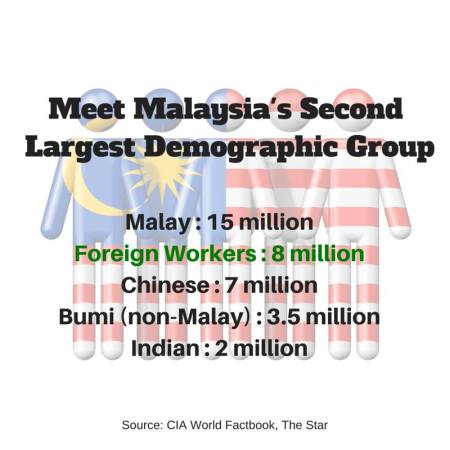
Malays, who are required to be Muslim in Malaysia, make up a majority of the country’s population alongside substantial Chinese and Indian minorities.

The Malaysian constitution gives primacy to Islam but allows the free practise of other faiths.

Under the slogan “One Malaysia”, the government has made racial harmony a central policy. Its commitment to that policy is now being severely tested.

The “Allah” ban is unusual in the Muslim world. The Arabic word is commonly used by Christians to describe God in such countries as Egypt, Syria and even nearby Indonesia, which is the world’s world’s largest Muslim nation. – BBC

Jan
09

SABRIMALA TEMPLE in 1942

Jan
07

Sweet Earth MV fm Hotel Istana, Kuala Lumpur Malaysia 3

http://americabikini.com/watch-video/-wJEw45pPcY/TheTyraBanksShow/Sweet+Earth+MV+fm+Hotel+Istana,+Kuala+Lumpur+Malaysia+3.html

Jan
07

Have you seen 2012? Where have all our money gone? Contributed to build one of the Arks to save the politicians of Najis! And they called themselves Muslim!

Unprecedented Financial Scandal – A Whopping RM8.4 Billion of Non-Performing Loans
By Matthias Chang
Thursday, 26 November 2009 19:11

Why has Bank Negara been keeping quiet all this while?

It is often said that the best time to announce bad news is just before the weekend or public holidays.

So it came as no surprise that CIMB Group Holdings Bhd (the country’s second largest financial group) decided to drop the bombshell that they have on their books a whopping RM8.4 billion non-performing loans (NPLs) knowing that it will be a long weekend following tomorrow’s public holiday – Hari Raya Haji! How very clever.

But this scandal will not go away, that’s for sure!

This amount of NPL is historic and unprecedented in the Malaysian banking industry.

The New Straits Times reported that a special asset management vehicle will be set up to acquire the said NPLs – the Southeast Asia Special Asset Management Bhd which will be wholly owned by the group.

These NPLs represent 45,000 accounts which have been written down to RM928 million net book value!

Wow!!!!!!!!

Why this announcement now?

These NPLs must have been in the bank’s balance sheet for quite some time. Recall that way back in early 2008, I had warned that Malaysian banks are in deep shit following the global financial tsunami, but the authorities, namely Bank Negara (National Reserve Bank) and the Ministry of Finance denied that such was the state of health of our banks and declared that everything was under control and that NPLs were within tolerable limits.

It was gross misrepresentation. It was also irresponsible.

If CIMB is in such deep shit, expect other government controlled banks to be in a similar predicament.

The decision of CIMB to park the NPLs in a special vehicle wholly owned by the group has not resolved the problem, as what this means is that the toxic waste has been transferred from the right pocket to the left pocket and by this sleight of hand, the bank is now deemed healthy!

If you believe this fairytale, you might as well cease to be an investor and/or trader in banking stocks! But what is more frightening is that these NPLs’ net book value is a mere RM928 million.

We can only draw one conclusion – these 45,000 accounts are not your ordinary loans to consumers (consumer banking) or small business loans (SME loans) because if it was so, there would be adequate securities in the form of landed properties (i.e. charges and/or mortgages) and or debentures.

I stand to be corrected, but these must be loans for “trading” either for the stock market or investments in debt instruments. Even if it is not and whatever may be the case, this huge black-hole is a scandal and the management must be brought to account for this sordid state of affairs. Heads must roll. CIMB is a GLC (GovernmentLinkedCompany) and therefore taxpayers’ monies are at stake.

The timing of this announcement, in the last quarter of 2009 is also significant. If as I had expected that the first quarter of 2010 leading to the second quarter will be the start of the second wave of the global financial tidal wave, then this tactical move by CIMB Bank is a pre-emptive move to cushion the inevitable fallout.

The Governor of Bank Negara must offer a public explanation as to how she has allowed and/or tolerated such a state of affairs and why no remedial actions were taken earlier. CIMB Group Holdings Bhd is the country’s second largest financial services provider and for this to happen at such a critical time is mind-boggling.

One cannot but conclude that whatever reforms and or so-called measures to ensure the continued good health of our banks are all talk, more talk and nothing else.

This issue must be debated in Parliament.

Bank Negara is supposed to be the watchdog of the banking industry. It is high time we have a watchdog to oversee the watchdog!

Take care.
Dr S W LENG